
By: Mohammadreza Rahbar, Alireza Raeisi, Zaynah Chowdhury, and Dena Javadi
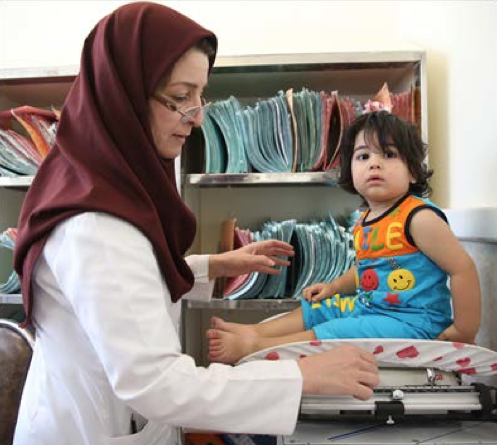
Iran has constructed a thorough network of health houses (Khaneh Behdasht) and health posts, located in rural and urban areas, respectively. CHWs called Moraghebe-Salamat staff each urban health post. CHW duties include providing reproductive healthcare, adult primary health care (PHC), and follow-up care for communicable and non-communicable diseases, including COVID-19. The World Health Organization noted that health houses were responsible for a steep decline in mortality and an increase in life expectancy, making the CHW program a key element in achieving a strong PHC system.
Background
As early as 1942, Iran began to train local people to address the health concerns of the rural poor. The West Azerbaijan Project, the Village Behdar Training Scheme, and other projects in the 1970s continued this process and formed the basis of Iran’s current rural national primary health care (PHC) system as well as its community health worker (CHW) program.
Implementation
Following health system reforms in the early 1980s, Iran began to expand its PHC system throughout the country by building an extensive network of health houses (Khaneh Behdasht) and health posts. Each health house serves approximately an average of 1,000 rural people and is staffed by one female Behvarz and, if needed, one male Behvarz. Health posts are located in urban areas and are responsible for delivering PHC to urban populations in a way similar to the health houses in rural areas. The urban health post covers an average population of 12,000 individuals. Each urban health post is staffed by several CHWs called a Moraghebe-Salamat, who work along with a midwife. There are now nearly 18,000 health houses and 34,000 Behvarzs in rural areas along with 5,700 health posts and 27,000 Moraghebe-Salamats in urban communities.
Roles/responsibilities
Both Behvarzs and Moraghebe-salamats are responsible for delivering essential health care services, including maternal and child health care, PHC for adults, reproductive health care, and identification and follow-up for important communicable and non-communicable diseases including COVID-19. Behvarzs are also responsible for limited symptomatic treatments along with environmental and occupational health in their area.
Training
Behvarzs are usually selected among rural youth with at least 12 years of general education. They complete a two-year training course. In recent years, because of the higher level of education among rural people, Behvarzs are increasingly selected from among young university graduates. Moraghebe-Salamats are university graduates with a public health, midwifery or nursing bachelor’s degree, and also complete an additional short course.
Supervision
Higher-level staff, including those from rural and urban centers of comprehensive health services, district health centers, as well as the deputy for health at universities of medical sciences, make regular supervisory visits to health houses and health hosts. University professors and faculty from the University of Medical Sciences evaluate program effectiveness and quality, and then they make decisions about needed program revisions.
Incentives and remuneration
Behvarzs receive a monthly salary of approximately US$ 350 per month from the government. For all PHC employees, including Behvarzs and Moraghebe salamats, incentives are also possible for good performance.
Impact
The CHW programs have been a fundamental element in the establishment of a strong PHC system in Iran. The World Health Organization concluded that health houses are responsible for a sharp drop in mortality and increased life expectancy over the last decades. The Behvarzs working in rural areas have contributed as
well to narrow the rural–urban gap in health status since the 1980s.
Author Affiliations
- Mohammadreza Rahbar is the Manager of Human Resource Group, Center for Health Network Management, Deputy for Health, Ministry of Health and Medical Education.
- Alireza Raeisi is the Deputy for Health, Ministry of Health and Medical Education.
- Zaynah Chowdhury is an Independent consultant.
- Dena Javadi works at the Alliance for Health Policy and Systems Research.
Read more
Health for the People: National Community Health Worker Programs from Afghanistan to Zimbabwe
Leave a Reply