
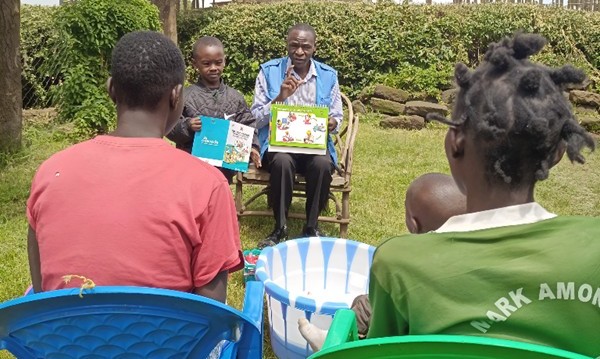
By: Apollo Ougo
 Apollo Ougo is a Community Health Promoter serving in Elburgon, Nakuru County, Kenya, under the Kasarani Community Health Unit. He holds a Diploma in Social Studies, which has strengthened his understanding of community needs, social dynamics, and the challenges many families face in accessing care. His work focuses on maternal health, sanitation, nutrition, disease prevention, and community-led behavior change. He is also a Community-Led Total Sanitation Master Certifier, supporting villages across Nakuru County to verify and sustain Open Defecation Free status. In 2022, Apollo was named 2nd Runner-Up Best Community Health Promoter in Nakuru County, in recognition of his contribution to grassroots healthcare and community-led health transformation.
Community health work begins at the household level. It begins with walking from one home to another, listening to families, understanding their challenges, and helping them take small steps that protect their health.
Before I officially became a Community Health Promoter, I was already involved in supporting vulnerable people in my community. I supported elderly people living with chronic illnesses and pregnant women who needed help accessing care and health services. My background in social studies also taught me that health is not only about hospitals and medicine. Through my experience and my studies, I learned that many people do not fail to seek care because they do not value their health. Sometimes they lack information. Sometimes they are afraid. Sometimes they do not know where to start. Sometimes they need someone close to them to follow up, encourage them, and link them to the right service. In short, health seeking is influenced by how people live, what they know, what they can afford, what they believe, and the support they receive from the people around them.
That is why I see my role as more than giving health messages. I walk with families. I support them to make choices that can prevent illness and improve their lives.
Walking With Pregnant Women
One of the areas closest to my heart is maternal health.
In my village, I work to ensure that every pregnant woman is identified early, registered under the Social Health Authority, and linked to Antenatal Care clinics. I identify pregnant women during household visits and even during my normal walks in the community. Once I know that a woman is pregnant, I immediately link her to the nearby health facility so she can begin clinic visits early.
But linking a woman to care is not enough. Follow up is very important.

I remind expectant women about clinic appointment dates. I talk to them and their families about birth preparedness. I encourage skilled delivery at health facilities. I also monitor pregnant women and sensitize them on danger signs during pregnancy.
These may look like simple actions, but they make a big difference.
Over time, I have seen more women attend Antenatal Care as a normal part of pregnancy. Families are also beginning to understand why clinic visits matter. More women are choosing skilled delivery at the local hospital instead of delivering at home in risky conditions.
This has helped reduce maternal complications because problems can be noticed early and referrals can be made in time. It has also improved newborn outcomes because women receive consistent monitoring throughout pregnancy.
To me, every pregnant woman who reaches care early is a life protected. Every safe delivery is a reminder that community follow-up matters.
Sanitation Is Also Health
As I continued working with households, I also saw how closely sanitation is linked to health.
Poor sanitation exposes families to disease. Open defecation contaminates the environment and increases the risk of illnesses such as cholera, dysentery, and typhoid. Children are especially affected, but the whole community suffers when the environment is unsafe.
Because of this, I became deeply involved in efforts to eliminate open defecation in my village. I have worked with residents through community meetings, household sensitization, behavior change communication, and continuous follow-up.
I have learned that sanitation change cannot be forced from outside. People must understand the problem and take ownership of the solution.
Using Community-Led Total Sanitation (CLTS) principles, I help communities discuss the risks of open defecation and reflect on what it means for their own health, dignity, and environment. Through community-triggering sessions, involvement of local leaders, household responsibility, and continued monitoring, communities begin to see sanitation as a shared responsibility.
This approach has helped villages move from temporary compliance to lasting change.

My Role as a CLTS Master Certifier
Apart from my work as a Community Health Promoter, I also serve as a Community-Led Total Sanitation (CLTS) Master Certifier. This role has allowed me to support sanitation work beyond my own village and across Nakuru County.
As a Master Certifier, I participate in the process of verifying and certifying villages that have successfully eliminated open defecation. The process is rigorous because Open Defecation Free certification should not be symbolic. It must reflect real and sustainable change.
During verification, I conduct independent visits to villages. I inspect household latrines and sanitation facilities. I confirm whether latrines are being used consistently. I assess whether handwashing facilities are available and in use. I also check whether the behavior change is visible across the whole community.
For a village to be certified as Open Defecation Free, every household must have access to a functional latrine. There should be no visible signs of open defecation. Handwashing stations should be available and used. Waste disposal practices should also meet public health guidelines.
Across Nakuru County, I have contributed to the certification of multiple villages as Open Defecation Free. This work is important because it protects families from preventable disease and creates cleaner living environments.
It also restores dignity and privacy, especially for women and girls.
For me, sanitation is not separate from health. A clean environment supports child health, maternal health, nutrition, and disease prevention. When the environment is safe, families have a better chance of staying healthy.
Helping Families Improve Nutrition
I also support families to improve nutrition through kitchen gardens.
Many families struggle to access diverse and nutritious foods. This affects children, pregnant women, lactating women, and other vulnerable members of the household. Through kitchen gardens, families can grow fresh vegetables rich in essential nutrients within their own homes.
I encourage households to establish these gardens because they are practical and sustainable. They help families improve their diet without depending entirely on the market.
As more households have taken up kitchen gardens, families are consuming more diverse and nutritious meals. Cases of malnutrition have reduced. Pregnant and lactating women are receiving better dietary support. Children are also benefiting through improved growth and development.
Kitchen gardens have strengthened food security and household resilience. They remind families that health can also be grown at home.

How These Efforts Come Together
In community health, one issue is often connected to another.
A pregnant woman needs clinic visits, but she also needs good nutrition. A child needs a clean environment, but also safe water, proper sanitation, and enough food. A household may need health education, but also follow-up, encouragement, and trust. That is why my work brings together maternal health, sanitation, nutrition, and disease prevention.
Through household visits, I have seen that health transformation is holistic. It is not enough to solve one problem and ignore the others. Families need support that reflects the reality of their lives. In my village, I have seen women become more supported, families practice safer sanitation, and households grow their own nutritious food. I have seen people become more informed and more willing to take action for their own health. This change has been possible because of dedication, consistent follow-up, community trust, and positive behavior change.
Recognition in Nakuru County
In 2022, I was honored to be named 2nd Runner-Up Best Community Health Promoter in Nakuru County. The recognition gave me more motivation to continue serving families in Nakuru County with humility and dedication.
Receiving this award was a personal milestone, but it was also a proud moment for Elburgon and the Kasarani Community Health Unit. It reminded us that Community Health Promoters are an important part of Kenya’s healthcare system.
What I Have Learned
My journey has taught me that lasting change often begins quietly. It begins when a pregnant woman attends her first clinic visit. It begins when a family builds and uses a latrine. It begins when a household plants vegetables near the home. It begins when a community decides that open defecation should no longer be part of their village.
As Kenya continues to strengthen its community health strategy, Community Health Promoters remain central to this work. We are close to the people. We understand the daily challenges families face. We can identify risks early, link people to care, and support communities to prevent illness before it becomes serious.
Health transformation does not only happen in clinics and hospitals. It also happens in villages, households, and communities. My story is a reminder that one committed Community Health Promoter, walking door to door, educating, encouraging, following up, and caring, can help transform an entire village.
Special Appreciation
Special appreciation to the Department of Health Services, County Government of Nakuru.